

Add Row
Add Element
cropper
update
HealthWorks Nevada
update
Add Element
  • Home
  • Categories
    • Quick & Healthy Recipes
    • Mind & Mood Boosters
    • Longevity & Vitality
    • Everyday Health Hacks
    • Healthy Home & Environment
    • Alternative Wellness
    • Chiropractic & Body Alignment
    • Movement & Fitness
July 16.2025
3 Minutes Read

Why Movement Flow is Essential for Everyday Fitness Success

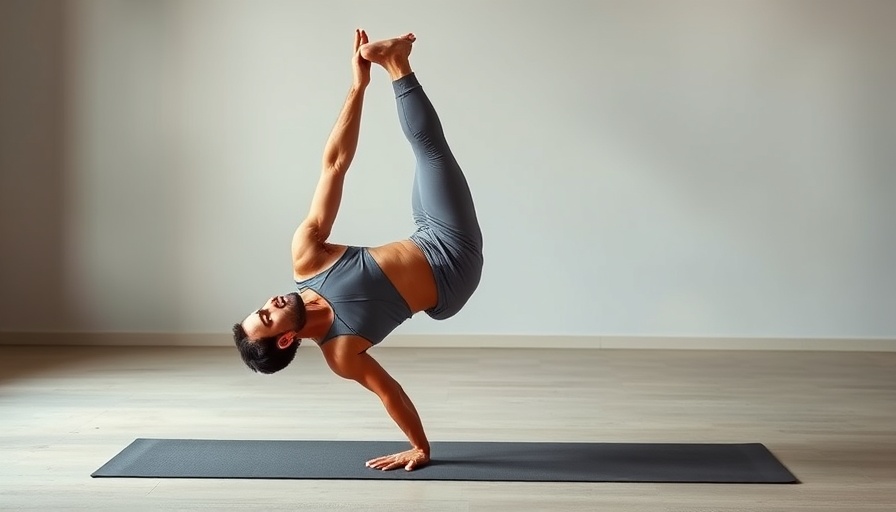
Movement Flow Training exercise in crow pose.

Unlocking Your Potential: The Art of Movement Flow

In a world where fitness regimens often resemble a mundane grocery list—think squats, push-ups, and perhaps a few deadlifts—it's vital to reconnect with the essence of movement that stems from our daily lives. Why? Because life, with all its complexities, requires more than just performing isolated exercises; it calls for a symphony of fluid motion.

Bridging the Exercise-Performance Gap

The crux of the issue lies in the gap between isolated exercises and the seamless flow of movement we experience in our day-to-day lives. Many individuals who are adept in the gym may find themselves vulnerable to injuries during everyday activities. This paradox arises not from poor execution of individual movements, but from the transitions between these movements. For instance, a strong athlete might be competent at squatting but risk injury when quickly changing direction, such as when picking up a child or reaching for an object.

This is where movement flow training becomes essential. Unlike traditional workouts that focus merely on strength, movement flow incorporates the body's need for adaptability and reaction. It encourages us to practice dynamic sequences that simulate real-life activities, such as lifting, reaching, and transitioning smoothly from one movement to another.

From Stiff Movement to Seamless Flow

Imagine navigating your environment with the grace of an artist painting a canvas in one continuous stroke—this is what developing movement flow can feel like. You learn how to control your body as it shifts between varied motions. Furthermore, the key benefits of training in this manner extend beyond mere aesthetics; they prepare you to handle the unexpected. Whether it’s a sudden obstacle on a hike or a twist while playing with kids, having a body trained in flow allows for reflexive, safe responses to these challenges.

The Importance of Movement Flow in Everyday Fitness

When we shift our mindsets from “more is better” to “better movement matters,” we find ourselves prioritizing overall health over sheer output. For the average person—not the elite athlete—this perspective is liberating. It frees us from the belief that hours in the gym are a necessity for fitness. Instead, we can recognize that embracing quality over quantity enhances our functional capabilities.

Moreover, cultivating movement flow empowers us to reclaim our bodily autonomy. The ability to string movements together not only heightens our situational awareness, it instills a sense of confidence in how we maneuver through life. By investing in our movement flow, we discover the freedom—much like a dancer or martial artist—to experience challenges with poise.

Practical Tips for Incorporating Movement Flow into Your Routine

For those eager to integrate movement flow into their fitness journey, start with these straightforward practices:

  • Focus on Transitions: During your workouts, consciously practice transitioning between movements. Instead of finishing a set of squats and jumping straight into push-ups, experiment with going from one to the other with a smooth, controlled movement.
  • Slow Down: Take your time while practicing movements. Slow and deliberate transitions highlight areas needing improvement and encourage mindful movement.
  • Dynamic Warm-Ups: Before workouts, do dynamic stretches that incorporate movements similar to your exercises. Think lunges that transition into twists or arm circles that move into shoulder drops.

Conclusion: The Next Steps Toward a Healthier You

By taking the initiative to incorporate movement flow into your routine, you’re not just enhancing your exercise regimen; you’re preparing yourself for life. With each graceful transition, you elevate your health, reduce the risk of injuries, and embrace the vibrant energy that comes from feeling truly in control of your body.

If you're ready to step beyond conventional workouts and explore how movement flow can revolutionize your fitness approach, take a moment today to assess your current routine and consider how you might weave in these principles.

Movement & Fitness

0 Comments

Write A Comment

*
*
Related Posts All Posts
02.11.2026

Jane Fonda Champions Mindfulness for Climate Action: Join Her Movement

Update Jane Fonda's Mission: A Call to Action Through Mindfulness Jane Fonda recently addressed a group at the Spirit Rock Meditation Center, urging them to embrace mindfulness not just for personal peace but as a vital tool in the battle against climate change. Her deep-rooted belief that mindfulness can lead to action reflects a lifetime of advocating for various social causes. Fonda's approach posits that personal mindfulness empowers individuals to engage more deeply with the crises facing our planet and fosters a sense of collective responsibility. Mindfulness as a Training Tool, Not an Escape At Spirit Rock, Fonda emphasized that the purpose of mindfulness is not to escape the painful realities of climate change but to train our minds to respond thoughtfully. Mindfulness, especially in the context of climate crisis, requires an active engagement with our surroundings, enhancing our capacity for empathy and action. Her participation in the EcoDharma & Transformational Culture Program exemplifies a fusion of spiritual practices and practical action, aimed at cultivating resilience in the face of ecological challenges. A Legacy of Activism Fonda's journey as an activist is a testament to her adaptability and dedication. Transitioning from a celebrated actress to a formidable climate advocate, she draws on her platform to engage younger generations. By forging connections with younger artists and activists, she inspires a renewed sense of urgency and purpose in the climate movement. Fonda's climate advocacy echoes her past efforts, proving that meaningful change often requires redefinition of personal goals and public roles. Empathy: The Heart of Collective Action During her reflection, Fonda pointed out the necessity of empathy, particularly in polarized times. “Acting is a profession of empathy,” she noted, underlining that understanding others’ perspectives is crucial for driving collective action. By fostering empathy, activists can build inclusive communities, empowering diverse voices to join the fight against climate change. Urgency Meets Hope Fonda projects an attitude of hope blended with urgency. Although the climate crisis feels daunting, her message is clear: the collective action inspired by mindfulness can lead to significant change. During her talk, she reminded those present that hope is not passive—a notion she passionately reiterated. “Hope is something we practice together,” she said, urging attendees to transform their mindfulness practice into actionable steps that contribute to change. The Road Ahead: A Call to Young Activists As the 2024 elections approach, Fonda implores young people to recognize their power through voting and active participation in the democratic process. Her recent mobilization efforts, including support for climate champions in local elections, highlight the need for younger generations to engage with the political sphere. Fonda firmly believes that achieving climate goals requires not only action but also the changing of minds through electing representatives who prioritize environmental issues. Conclusion: Join the Movement Jane Fonda’s presence at Spirit Rock serves as a reminder that personal mindfulness and collective activism are intertwined. Her experiences reveal that transforming inner feelings of awareness into outward actions can lead to meaningful change. Participation in initiatives like the Jane Fonda Climate PAC encourages individuals to unite in support of climate-friendly policies, ensuring that future generations inherit a healthier planet. The call is clear: get involved, raise your voice, and become a part of the solution. For readers looking to make a difference, it is essential to seek out community initiatives and political movements that align with the principles of sustainability and mindfulness. Together, we can create a world where action rooted in awareness leads to impactful change.

02.10.2026

Unlock Lasting Happiness: How to Fall in Love with Connection Skills

Update Discovering the Skill of Connection: How to Fall in Love Falling in love and finding happiness often seem like elusive feelings rather than attainable skills. Yet, as research shows, building genuine connections is not only possible but essential for cultivating lasting joy. At the heart of this pursuit lies the simple act of fostering connection—something we all crave as social beings. Understanding Vulnerability and Its Role in Connection As we navigate through life, we tend to shield ourselves from vulnerability. We erect walls to protect our hearts, limiting our capacity for connection. This defense mechanism, while understandable, often stands in the way of forming meaningful relationships. According to Kirsti Formoso, genuine connections enable us to tap into our deeper selves, promote our well-being, and nourish our souls. When we allow vulnerability to guide our interactions, we invite authenticity into our relationships. Eye Contact: A Window to Deeper Connections One powerful technique for breaking down barriers is maintaining eye contact. A simple gaze can reveal a wealth of emotion and understanding. A practice highlighted in the Mindful article encourages us to see the person behind the eyes—to recognize shared humanity—and through that recognition, happiness can emerge. Engaging in sustained eye contact with those we meet, whether strangers or life partners, has the potential to foster a rich sense of connection that combats loneliness. The Pillars of Meaningful Relationships: Active Listening and Vulnerability To cultivate lasting happiness, we must emphasize the quality of our connections rather than merely the quantity. Amanda Horner suggests focusing on deepening relationships through trust, vulnerability, and active listening. When conversation partners feel heard and valued, they are more likely to engage authentically, diminishing barriers that typically accompany superficial interactions. Shared Experiences: The Glue of Connection Engaging in shared activities strengthens bonds, from small traditions like regular coffee dates to more significant life experiences such as travel. These shared moments create memories that deepen emotional ties, making our relationships more fulfilling. Indeed, the value of collective experiences in cementing connections cannot be overstated. They provide opportunities for laughter and bonding, critical elements in the art of love. Actionable Steps for Falling in Love with Connection If you wish to deepen your connections, start by being intentional about your engagement with others. Ask meaningful questions that spark genuine conversations, embrace moments of vulnerability, and be present through active listening. Keep in mind that it’s about the depth of connections rather than your social media presence. As Formoso notes, true relationships involve more than just superficial exchanges; they require dedication and effort to flourish. Final Thoughts: The Ripple Effect of Genuine Connection Meaningful connections are not just a personal pursuit; they extend into the broader community, fostering a ripple effect of happiness. By nurturing our relationships, we contribute not just to our joy but soon to the happiness of those around us. In a fast-paced world driven by surface-level interactions, letting down our guards and investing in genuine connections is a revolutionary act toward personal and collective happiness. If you’re inspired to foster deeper connections and cultivate lasting happiness, reach out to someone today. Start a conversation, make eye contact, and engage with authenticity. You may be surprised by the joy and connection that can blossom from such small acts.

02.09.2026

Why Asking 'How Many Reps?' Won't Improve Your Fitness Journey

Update Think Quality Over Quantity: The Real Secret to Fitness When we think about fitness, the common question that pops into our minds often revolves around the magic number of repetitions for each exercise — but what if we told you that this question is all wrong? Many fitness enthusiasts tend to chase the number of reps, believing that more is always better. However, recent studies suggest that the key to unlocking your best fitness potential lies in focusing on the quality and intensity of your workouts instead of just the quantity. Understanding Volume vs. Intensity The debate between training volume and intensity has been a long-standing one. Volume refers to the total amount of work done in a workout (sets x reps x weight), while intensity is about how hard you push yourself during each set. For effective strength training, particularly for those of us who lead busy lives, it’s vital to understand how to balance these two elements. Research shows that while increasing workout volume can promote muscle growth, excessive focus on it may lead to plateaus or even injuries. Instead, integrating higher intensity into fewer workout repetitions can often yield better strength gains, which is especially important for busy individuals who want to make the most of their limited time at the gym. Designing Effective Workouts For those pressed for time, creating an efficient workout routine can feel daunting. Studies recommend prioritizing multi-joint and dynamic movements, such as squats and deadlifts, as these exercises tend to engage multiple muscle groups more effectively than isolated exercises. Aim for at least four sets per muscle group weekly, integrating varied rep ranges (6-15 reps) that challenge your strength without burning you out. Make It Work for You: Time-Efficient Training Strategies If you're thinking, "I don't have the time to spend hours working out," you're not alone. Many adults face the same challenge. Here are a few actionable strategies that can help maximize your training effects: Supersets: Combine two exercises targeting different muscle groups back-to-back without rest. This technique reduces overall workout time and enhances muscular endurance. Rest-Pause training: Take short breaks during sets to allow higher intensity while keeping your workout short and effective. Micro-Dosing: Consider very short but frequent workouts (say 15 minutes). Emerging evidence shows that these can yield results comparable to longer sessions, especially for busy individuals. Adapting these techniques can lead not only to better results but also make exercising more feasible for you, proving that you don’t need a lengthy gym session to achieve your fitness goals. The Long-Term Benefits of Smart Training By shifting our mindset from chasing numbers to honing in on the quality of our workouts, not only do we save precious time, but we also set ourselves up for stronger long-term fitness habits. Quality workouts help prevent injuries, foster better muscle adaptation, and contribute to a more enjoyable exercise experience. Remember, fitness is a marathon, not a sprint. Set sensible goals, embrace consistency, and celebrate your progress, no matter how small. Take Action for a Healthier You! If you're ready to shift how you view fitness and workout efficiency, start with one of the methods mentioned above. Focus on quality and see how it enhances not just your performance, but your overall wellness. With this approach, you're well on your way to achieving a healthier lifestyle — even on a busy schedule!

Terms of Service

Privacy Policy

Core Modal Title

Sorry, no results found

You Might Find These Articles Interesting

T
Please Check Your Email
We Will Be Following Up Shortly
*
*
*